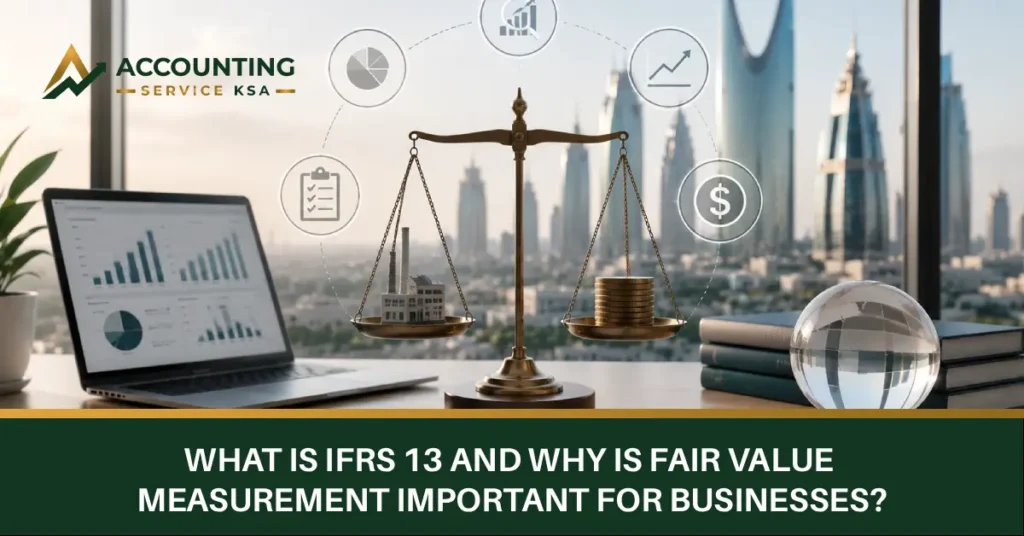
Running a business in Saudi Arabia today means dealing with more than just sales and profits. Companies also need to follow proper accounting rules to stay transparent, trustworthy, and compliant with international standards. One rule that often comes up in financial discussions is IFRS 13. If you have heard this term but are not fully sure what it means, you are not alone. Many business owners and finance teams across the Kingdom are still learning how this standard affects their daily operations.
In this blog, we will explain IFRS 13 in simple words, why fair value measurement matters, and how it connects to financial reporting standards in Saudi Arabia. By the end, you will have a clear understanding of why working with professionals like Accounting Services KSA can make this process much easier for your business.
Understanding IFRS 13 in Simple Terms
IFRS 13 is an international accounting standard that explains how companies should measure something called fair value. Instead of using random guesses or outdated prices, IFRS 13 gives businesses a clear and consistent way to calculate what an asset or liability is truly worth in the current market.
Think of it this way: if your company owns equipment, property, or investments, you need to know their real value today, not the price you paid years ago. IFRS 13 helps businesses figure out that current value in a fair and honest way, which is extremely useful for accurate financial reporting standards.
This standard is widely used around the world, and Saudi Arabia has also adopted IFRS rules to align with global business practices. That is why understanding IFRS 13 is becoming more important for companies of all sizes operating in the Kingdom.
What Is Fair Value Measurement?
Fair value measurement simply means figuring out the price an asset would sell for, or a liability would be settled for, in a normal market transaction between willing parties. It is not about guessing or estimating randomly. Instead, it follows a structured approach based on market information.
For example, if a company wants to sell a piece of land, fair value measurement helps determine what a buyer would realistically pay for that land today, based on current market conditions. This is different from simply using the original purchase price.
Businesses use fair value measurement for several reasons, including:
- Preparing accurate financial statements
- Attracting investors who want transparent reporting
- Making better business decisions based on real asset values
- Meeting requirements for IFRS compliance Saudi Arabia businesses must follow
Without proper fair value measurement, financial statements can become misleading, which may create problems with investors, banks, or government authorities.
Why Does IFRS 13 Matter for Businesses in Saudi Arabia?
Saudi Arabia has been working hard to strengthen its economy and attract more international investment. Part of this effort includes encouraging companies to follow global accounting standards, including IFRS 13. When businesses use this standard correctly, it builds trust with local and international stakeholders. Here are some reasons why IFRS 13 is important for businesses operating in the Kingdom:
- It improves transparency in financial reports
- It helps companies stay aligned with IFRS compliance Saudi Arabia regulations
- It supports better investment decisions
- It reduces the risk of financial misstatements
- It strengthens trust with banks, auditors, and shareholders
As more companies in Saudi Arabia expand and seek funding or partnerships, having accurate financial reporting standards becomes a major advantage. This is exactly where IFRS 13 plays a key role.
How IFRS 13 Affects Different Types of Assets
IFRS 13 does not apply to just one type of asset. It is used across a wide range of items that businesses commonly deal with, such as:
- Property and real estate
- Equipment and machinery
- Investments and financial instruments
- Inventory in certain cases
- Intangible assets like trademarks or goodwill
For each of these, fair value measurement provides a structured method to estimate true market value instead of relying on outdated figures. This is especially helpful for businesses in Saudi Arabia’s growing real estate, retail, and investment sectors, where asset values can change quickly.
Common Challenges Businesses Face With IFRS 13
While IFRS 13 sounds straightforward, applying it correctly can be challenging without proper accounting knowledge. Some common difficulties businesses face include:
- Understanding which valuation method to use
- Gathering accurate market data
- Applying fair value measurement consistently across reports
- Keeping up with updates to financial reporting standards
- Ensuring full IFRS compliance Saudi Arabia authorities expect
These challenges are common, especially for small and medium businesses that may not have a dedicated finance team. This is where professional support becomes valuable.
How Accounting Services KSA Can Help?
Many businesses in the Kingdom turn to expert support to handle complex accounting standards like IFRS 13. Accounting Services KSA works closely with companies to simplify this process and ensure everything is done correctly. With the help of Accounting Services KSA, businesses can:
- Accurately apply fair value measurement to their assets
- Stay updated with the latest financial reporting standards
- Maintain full IFRS compliance Saudi Arabia regulations require
- Prepare clear and professional financial statements
- Save time by letting experts handle technical accounting work
Instead of struggling with complicated rules on your own, partnering with Accounting Services KSA allows you to focus on growing your business while professionals manage your financial reporting needs.
Practical Tips for Businesses in Saudi Arabia
If your company is preparing to apply IFRS 13 or improve its overall accounting practices, here are some simple tips to keep in mind:
- Keep your financial records updated and organized
- Review your assets regularly to track real market value
- Train your finance team on current accounting standards
- Work with experienced professionals for technical guidance
- Stay informed about changes in IFRS 13 and related rules
Following these steps can make a big difference in how smoothly your business handles fair value measurement and other accounting requirements.
Why Accurate Accounting Matters More Than Ever?
Saudi Arabia’s business environment is growing fast, with new regulations, increased foreign investment, and stronger expectations for transparency. Companies that follow proper accounting standards, including IFRS 13, are better positioned to build trust, secure funding, and expand confidently.
This is also why accounting services Saudi Arabia businesses rely on are becoming more important than ever. Professional guidance ensures that companies do not fall behind on compliance or make costly financial mistakes.
Choosing reliable accounting services Saudi Arabia companies trust, such as Accounting Services KSA, gives businesses peace of mind knowing their financial reporting is accurate, compliant, and ready for growth.
Conclusion
IFRS 13 plays a major role in helping businesses understand the true value of their assets through proper fair value measurement. For companies operating in Saudi Arabia, following this standard is not just about following rules. It is about building trust, improving decision-making, and supporting long-term business growth.
As the Kingdom continues to strengthen its economic landscape, staying aligned with financial reporting standards and IFRS compliance Saudi Arabia expectations will only become more important. Whether you run a small business or a large company, understanding IFRS 13 can help you stay ahead.
If you want expert support in applying IFRS 13 correctly, Accounting Services KSA is here to help. With the right guidance, your business can stay compliant, transparent, and ready for future opportunities.
Note: The above-mentioned services are provided via network firms if not provided directly
FAQs
Why is fair value measurement important for businesses?
Fair value measurement helps businesses understand the real worth of their assets today, which leads to more accurate financial statements and better decision-making.
Does IFRS 13 apply to all businesses in Saudi Arabia?
Many businesses, especially those following international financial reporting standards, need to apply IFRS 13 depending on their size, structure, and reporting requirements.
What happens if a business does not follow IFRS 13 properly?
Incorrect application can lead to inaccurate financial statements, reduced investor trust, and potential compliance issues with regulatory authorities in Saudi Arabia.
Which industries in Saudi Arabia are most affected by IFRS 13?
Industries such as real estate, banking, investment, retail, and manufacturing are commonly affected because they regularly deal with assets and investments that require fair value measurement.
Can small businesses benefit from IFRS 13?
Yes, small businesses can benefit from better financial transparency, improved investor confidence, and more accurate reporting by applying IFRS 13 correctly.