
Running a business in Jeddah involves daily sales, supplier bills, employee payments, bank transactions, customer collections, and other financial records. Keeping these records updated helps business owners understand income, expenses, cash movement, receivables, and payables. Our bookkeeping Jeddah support helps businesses maintain organised records for regular review. We support trading companies, restaurants, retailers, logistics businesses, contractors, and professional firms based on their accounting needs.
Accounting Services KSA provides practical bookkeeping support for businesses that need reliable records without maintaining a large internal finance team. We record transactions, reconcile accounts, review supporting documents, and prepare regular financial information. Businesses searching for bookkeeping services in Jeddah can choose a monthly arrangement based on transaction volume and reporting needs. The service can support regular monthly updates or month-end bookkeeping, helping management keep financial records ready for accounting, VAT, audits, and routine financial reviews.
What Does Bookkeeping Cover for Jeddah Businesses?
Bookkeeping is the regular recording, classification, and checking of a business’s financial transactions. It includes sales entries, purchase entries, expense records, customer invoices, supplier bills, receipts, payments, bank transactions, and ledger updates. A bookkeeper also checks whether recorded transactions agree with bank statements, invoices, and other supporting documents.
For a business in Jeddah, this work can cover daily retail sales, restaurant POS transactions, import purchases, logistics expenses, project costs, or professional service invoices, depending on the business model. Good bookkeeping gives management an up-to-date record of what has happened financially. It can show where money is coming from, which costs are increasing, what customers still owe, and what the business needs to pay. These records are also useful when management needs to compare one month with another or prepare information for an external accountant or auditor. It also creates organised records that accountants can use for reporting, tax-related work, audits, and financial reviews.

Bookkeeping Services for Jeddah Companies
Businesses in Jeddah have different transaction patterns, so bookkeeping needs to match the way each business earns and spends money.
Trading and wholesale businesses
Records can include local purchases, imports, supplier balances, sales invoices, inventory movements, and related costs.
Retail stores
Daily POS sales, cash receipts, card settlements, refunds, purchases, stock movements, and operating expenses need regular recording.
Restaurants and cafés
Sales from POS systems, food purchases, supplier invoices, payroll entries, delivery income, and daily cash or card settlements require careful checking.
Logistics companies
Customer invoices, transport costs, fuel, vehicle expenses, subcontractor payments, and collections need to be recorded against the right accounts.
Construction companies
Project purchases, materials, subcontractor bills, labour costs, progress invoices, and project-related expenses need clear classification.
Professional service firms
Client invoices, employee expenses, subscriptions, office costs, collections, and project expenses form a large part of the bookkeeping work.
Our Bookkeeping Process in Jeddah
Accounting Services KSA follows a clear bookkeeping process based on your business records and reporting needs. We record transactions, reconcile accounts, review documents, and prepare regular financial reports.
Review of Existing Records
We check the current books, bank statements, invoices, receipts, account balances, and available accounting data to identify missing or unclear items.
Chart of Accounts Review
We check whether income, expenses, assets, liabilities, and other accounts are grouped correctly for the business.
Transaction Recording
Sales, purchases, expenses, receipts, payments, and other financial activity are entered according to the agreed bookkeeping schedule.
Account Reconciliation
Bank accounts, customer balances, supplier balances, and other relevant accounts are compared against supporting records and investigated when differences appear.
Month-End Review
We check outstanding entries, unusual balances, missing documents, and account movements before the period is closed.
Financial Reporting
Regular reports are prepared so business owners and management can review revenue, expenses, profit, cash movement, receivables, and payables.
Bookkeeping Cleanup Services in Jeddah
Old or incomplete records can make current financial reporting difficult. Our cleanup work focuses on bringing earlier records into a usable condition before regular bookkeeping continues.
- Backlog recording: We enter transactions for periods where bookkeeping was delayed or left incomplete.
- Bank reconciliation cleanup: Old bank statements are compared against ledger entries to identify unreconciled transactions.
- Missing document review: We identify transactions that need invoices, receipts, statements, or other supporting evidence.
- Duplicate and incorrect entry checks: Repeated entries and obvious classification issues are reviewed and corrected based on available records.
- Customer and supplier balance review: Outstanding receivables and payables are checked against statements and available transaction details.
- Opening balance checks: Previous-period balances are reviewed so the current bookkeeping starts from a consistent set of records.
How Much Do Bookkeeping Services Cost in Jeddah?
The cost depends on the amount of work involved. A useful quote should reflect the actual bookkeeping workload rather than only the size of the company. Two businesses with the same number of employees can have very different requirements if one has a single bank account and the other manages several branches, inventory, POS settlements, and a high volume of supplier invoices.
A small business with limited transactions may need a simpler monthly package, while a multi-branch company, importer, retailer, or business with inventory may require more account reviews and reporting.
Pricing Factor |
How It Affects the Cost |
Typical Requirement |
Estimated Monthly Cost (SAR) |
|---|---|---|---|
Transaction Volume
|
More sales, purchases, and expenses require more recording and review time.
|
Up to 100 transactions
|
SAR 800–1,500
|
Bank Accounts
|
Each account may require separate reconciliation and statement review.
|
1–2 active accounts
|
SAR 800–1,500
|
Branches
|
Multiple locations can require additional sales and expense reconciliation.
|
2–3 branches
|
SAR 1,500–3,000
|
Inventory
|
Stock purchases, movements, and cost records add to the bookkeeping workload.
|
Retail, wholesale, F&B
|
SAR 1,500–3,500
|
Cleanup Work
|
Incomplete or outdated records may require additional time before regular bookkeeping begins.
|
3–12 months of backlog
|
SAR 2,000–5,000+
|
Disclaimer: Please note that all timelines and cost estimates mentioned are indicative only. Final pricing and processing time are confirmed after an initial review of your business type, ownership structure, documentation status, and banking requirements.
Bookkeeping Challenges Jeddah Businesses Face
Accounting Services KSA works with businesses that face practical record-keeping problems during normal operations.
Late bookkeeping
Transactions remain unrecorded for weeks or months, leaving management without current financial information.
Unreconciled bank accounts
Ledger balances do not match bank statements, making it difficult to identify the real cash position.
Unclear customer balances
Outstanding invoices may not be tracked correctly, making collection follow-up harder.
Supplier account differences
Payments, credit notes, or invoices may be missing from supplier accounts.
POS and bank differences
Daily sales recorded through a POS system may not match deposits received through cash or card channels.
Heavy spreadsheet dependence
Businesses may rely on several spreadsheets that make it difficult to maintain one consistent set of financial records.
Bookkeeping Services Near Jeddah Port
Businesses involved in import, distribution, logistics, and related activities may have additional records linked to goods entering through Jeddah Port.
Record purchase information against relevant customs and shipping documents.
Track transportation, freight, and other costs related to imported goods.
Record applicable clearing and handling expenses as part of the transaction records.
Maintain supplier invoices and payment records for international purchases.
Record foreign-currency purchases and related payment information accurately.
Match received goods with purchase records before recording them in inventory accounts.
Why Accurate Bookkeeping Matters for Jeddah Businesses
Keeping financial records current gives owners and management a clearer view of the business throughout the year, not only when annual accounts are prepared.
Current records show available cash, expected collections, and upcoming payments.
Clearer profitability
Proper income and expense classification helps management see how the business is performing.
Better receivable control
Updated customer balances make it easier to identify overdue amounts and follow up on collections.
Improved supplier tracking
Current payable records help businesses review what they owe and what has already been paid.
Stronger VAT records
Proper sales and purchase records provide useful accounting data for VAT review and related reporting work.
Easier financial review
Organised records make it simpler to prepare reports, respond to auditor requests, and investigate unusual transactions.
What Documents Are Needed for Bookkeeping?
The documents needed depend on the business activity and the scope of the service. Common records include:
- Bank statements: Used to record and reconcile cash movements.
- Sales invoices: Support revenue entries and customer balances.
- Purchase invoices: Support purchases, expenses, and relevant VAT information.
- Expense receipts: Provide evidence for business expenses.
- Supplier statements: Help compare recorded payables with supplier records.
- Payroll records: Support salary and related accounting entries.
For import-based businesses in Jeddah, customs documents and related purchase records may also be needed when those transactions form part of the agreed bookkeeping scope.
Why Jeddah Businesses Work With Us for Bookkeeping
Accounting Services KSA focuses on practical bookkeeping support built around the records and reporting needs of each Jeddah business. Businesses comparing bookkeeping Jeddah providers can discuss their current records, reporting needs, and preferred work schedule with our team.
- Jeddah-focused support: We work around the transaction patterns and operating needs of businesses based in Jeddah.
- Clear bookkeeping scope: The work is agreed around transaction volume, accounts, reporting, software, and other business requirements.
- Regular communication: Clients can discuss missing records, unusual transactions, and account questions during the bookkeeping cycle.
- Qualified accounting support: Work is handled by accounting professionals with knowledge of business records and financial reporting.
- Compliance-aware records: Bookkeeping is carried out with attention to records that may later be needed for VAT, ZATCA-related work, audits, or financial reporting.
- Flexible service arrangements: Businesses can request regular bookkeeping or specific cleanup work based on their current situation.
Note: The above-mentioned services are provided via network firms if not provided directly
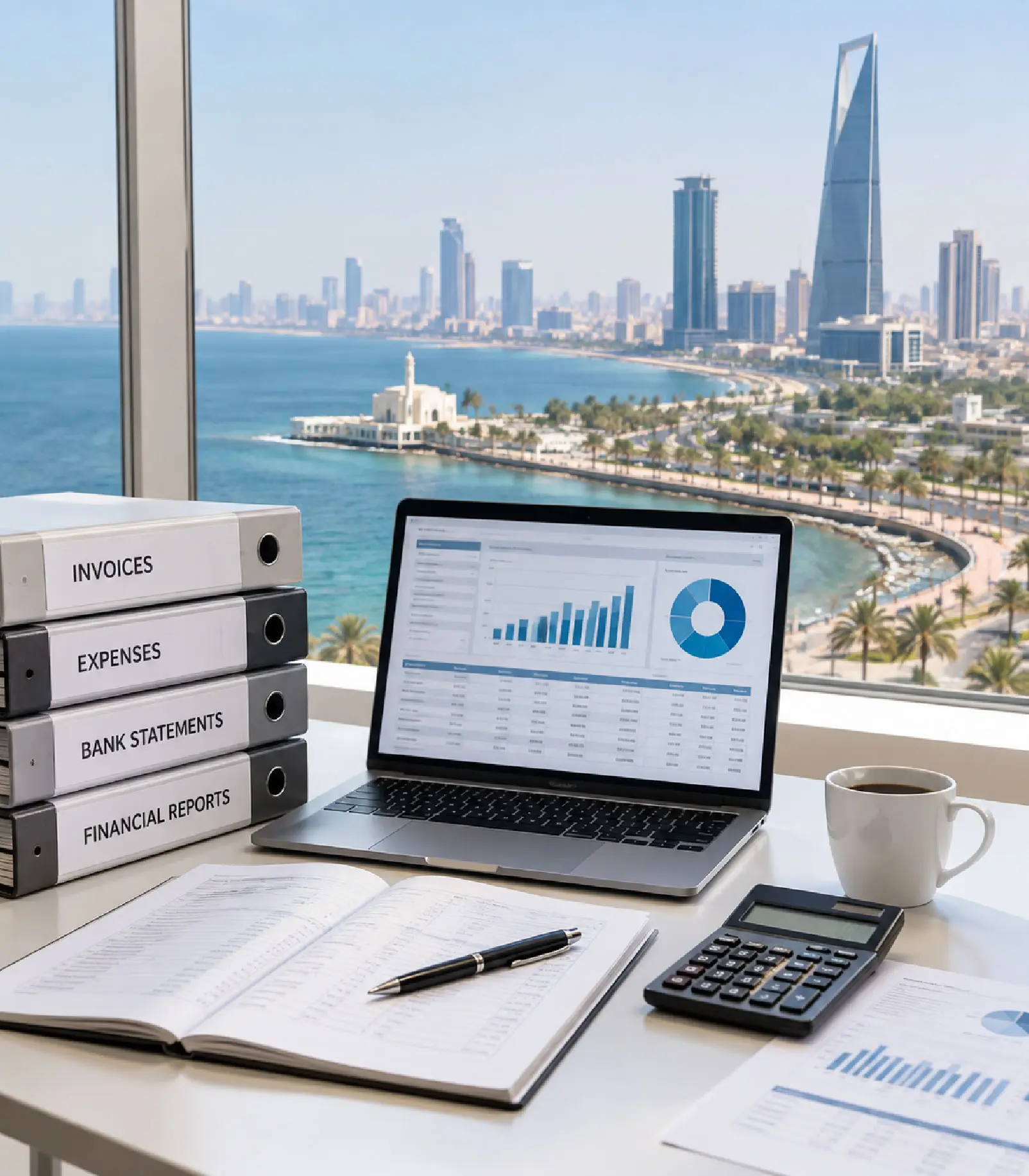
Get Bookkeeping Support in Jeddah
Keeping books up to date can take significant time when sales, purchases, expenses, payroll, bank activity, and customer collections are handled alongside daily business operations. Accounting Services KSA can take care of the regular recording and checking work, so your team has organised financial records to review. If you are looking for bookkeeping Jeddah support, our team can review your current setup and explain the work involved.
Our support is suitable for businesses that need monthly bookkeeping, historical cleanup, account reconciliation, or regular financial reports. If your books are behind, your bank accounts do not reconcile, or your current bookkeeping arrangement no longer fits the business, speak to our team about the records you have and the support you need. We can discuss the scope, reporting requirements, accounting system, and expected transaction volume before the service begins.

FAQs
What does bookkeeping services Jeddah include?
It includes transaction recording, ledger maintenance, bank reconciliation, AP and AR records, expense entries, and agreed financial reports.
How much does bookkeeping services in Jeddah cost?
Pricing depends on transaction volume, bank accounts, branches, inventory, reporting needs, and any historical cleanup required.
Can you clean up old bookkeeping records?
Yes. Historical records can be reviewed, entered, reconciled, and corrected based on the available documents and agreed scope.
Do you provide bookkeeping for small businesses?
Yes. Small businesses can use a monthly service based on their transaction volume, accounting system, and reporting needs.
Can bookkeeping support VAT records?
Yes. Proper sales, purchase, and expense records provide accounting data that can be reviewed for VAT-related reporting and reconciliation.